Bat Care
D&P Cricket
Hidden first item
delete this if you want the first item to be open by default
Preparation of bats that haven’t been pre-prepared
Oiling
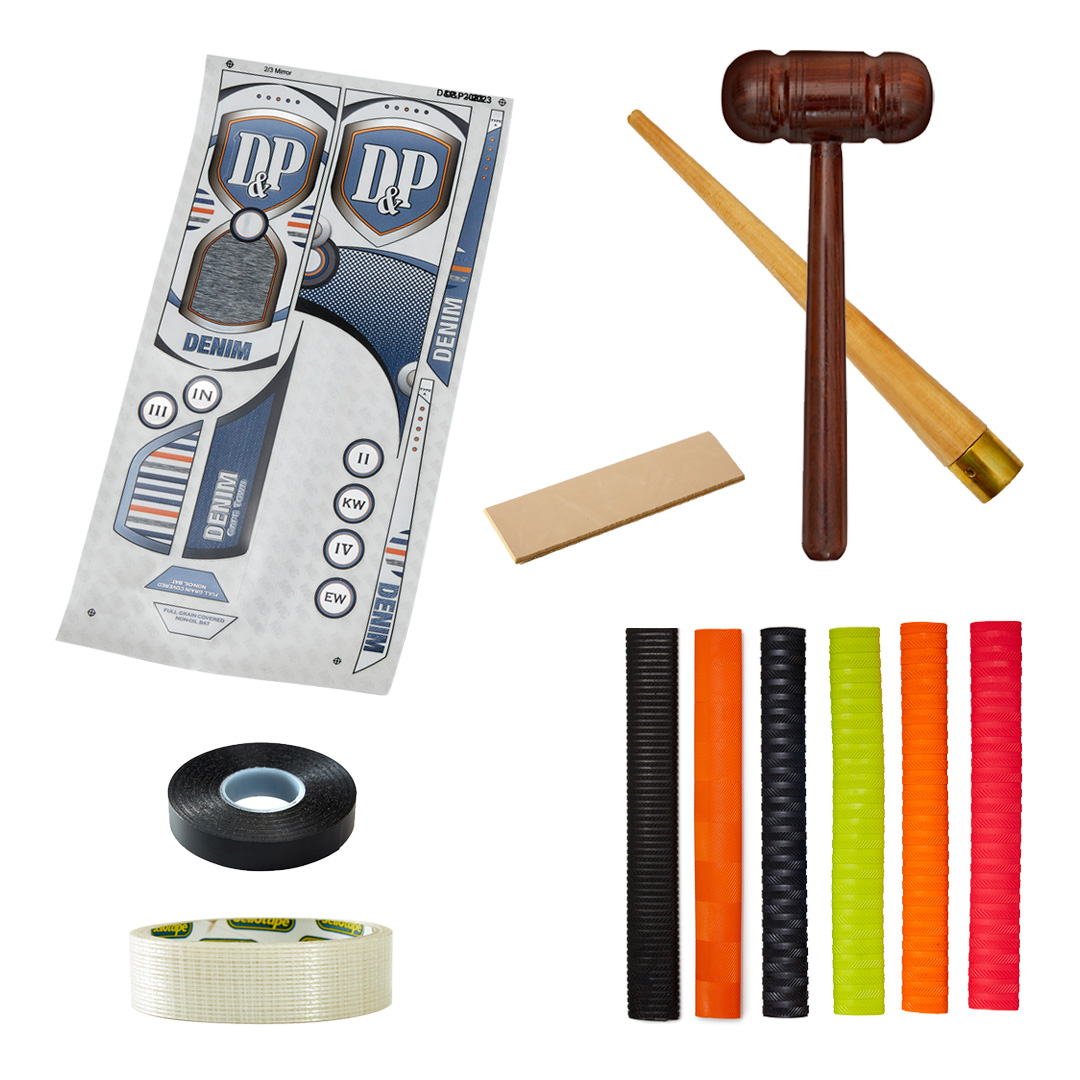
Before use, apply two coats of cricket bat oil, 5ml oil per coat, 24 hours apart. Gently rub into the front, edges and toe of the blade with the oil, taking care to avoid the splice.
If oiled correctly, the bat fibres should be supple and the face and edges will dent rather than crack during the knocking-in process.
Knocking-in
The bat should be carefully knocked-in with a bat mallet, concentrating on the blade and especially on the edge of the blade.
The bat should be struck by gradually increasing force in all areas where one would normally expect to hit the ball.
The edges or toe should never be struck at right angles as this would be likely to cause damage.
This process should take in the region of four hours, although it may vary, as every bat is different.
Initial use
New bats will still need to be played in, even with the correct preparation, before being used in a competitive game or practice situation.
It is highly recommended to first have a few gentle practice sessions in the nets with old balls to work in the bat and for the player to get used to the bat during this bonding period.
Under no circumstances should a bat be used in match conditions less than two weeks following purchase.
–
*Note: English Willow Bats carry no guarantee unless they are prepared correctly.
As a bare minimum for new bat preparation, D&P Cricket recognises a correctly prepared bat as having been professionally oiled and knocked-in or as having been professionally knocked-in and fitted with an anti-scuff.
At D&P Cricket we offer the following two preparations for online purchases of new bats, more options are available via the shop email shop@dpcricket.co.za
Option 1: Basic Preparation
• Machine knocked-in
• Fitted with a toe guard to protect the toe
• Fitted with anti-scuff to protect to ball striking blade.
Option 2: Advanced Preparation (This option takes a few days longer, 4-5 working days plus courier time)
• Oiled and knocked-in by hand
• Fitted with either a fitted or poxy toe guard to protect the toe
• Fitted with anti-scuff to protect to ball striking blade.
Pre-prepared bats
Pre-prepared bats have been factory prepared and are ready for use. However it is important to remember that cricket bats can never be over knocked-in. The more time that is spent preparing the bat, the better it will assist in improving the performance and well as the durability of the bat.
–
*Note: English Willow Bats carry no guarantee unless they are prepared correctly.
As a bare minimum for new bat preparation, D&P Cricket recognises a correctly prepared bat as having been professionally oiled and knocked-in or as having been professionally knocked-in and fitted with an anti-scuff.
At D&P Cricket we offer the following two preparations for online purchases of new bats, more options are available via the shop email shop@dpcricket.co.za
Option 1: Basic Preparation
• Machine knocked-in
• Fitted with a toe guard to protect the toe
• Fitted with anti-scuff to protect to ball striking blade.
Option 2: Advanced Preparation (This option takes a few days longer, 4-5 working days plus courier time)
• Oiled and knocked-in by hand
• Fitted with either a fitted or poxy toe guard to protect the toe
• Fitted with anti-scuff to protect to ball striking blade.
Initial use
New pre-prepared bats will still need to be played in, even with the correct preparation, before being used in a competitive game or practice situation.
It is highly recommended to first have a few gentle practice sessions in the nets with old balls to work in the bat and for the player to get used to the bat during this bonding period.
Under no circumstances should a bat be used in match conditions less than two weeks following purchase.
Maintenance during cricket season
The blade of the bat should be rubbed down, periodically, with fine sandpaper and a light coat of bat oil reapplied in order to keep the surface supple and prevent the bat from drying out.
It is equally important to ensure that the bat is not over-oiled as this will lead to a deadening of the bat and a reduction in performance (as a rough guide, apply no more than 2 light coats per year).
Damage that may occur
Cricket bats are handcrafted from natural materials and, as a result, are expected to deteriorate during usage. Cricket bat manufacturers have put together the following notes to assist the explanation of certain likely scenarios, which may occur within the life-span of the bat.
Breakage
1. Handle breakage
Cause: General wear and tear.
Solution: The bat itself is not replaceable but the handle may be repaired at the manufacturer’s discretion.
2. Blade breakage
Cause: Weak or excessively dry willow.
Solution: Potentially replaceable by full or partial credit at the manufacturer’s discretion.
Blade damage
1. Surface cracking to the face of the blade
Cause: General wear and tear.
Solution: Not replaceable as the crack will not affect the performance of the bat. Repairable at the manufacturer’s discretion.
2. Surface cracking to the edge of the blade
Cause: General wear and tear.
Solution: Not replaceable as the crack will not affect the performance of the bat. Repairable at the manufacturer’s discretion.
3. Surface cracking to the toe area of the blade
Cause: General wear and tear. This type of damage is often caused by the striking of a ‘yorker’ delivery and/or excessive tapping of the crease and is therefore not the fault of the bat.
Solution: Not replaceable as the crack will not affect the performance of the bat. Repairable at the manufacturer’s discretion.
4. Split through the toe area of the blade
Cause: This type of damage is caused by the striking of a ball at, or near the base of the blade, e.g. the striking of a ‘yorker’.
Solution: Yorker damage is not replaceable. Repairable at the manufacturer’s discretion.
5. Cracking to the shoulder area of the blade
Cause: General wear and tear.
Solution: Not replaceable as the crack will not affect the performance of the bat. Repairable at the manufacturer’s discretion.
6. Damage due to misuse of the bat or by accident
Cause: Generally caused by accidentally striking an object other than the ball, stumps for example.
Solution: Not replaceable, may be repairable at the customer’s expense.
7. Moisture damage
Cause: This type of damage occurs as a result of use in damp or wet conditions. It generally leads to swelling of the toe area of the blade, which after drying may well split.
Solution: Not replaceable as there is no fault from the manufacturing or the materials used. The damage may be repairable at the manufacturer’s discretion and the customer’s cost.
8. Damage due to poor quality cricket balls
Cause: Poor quality or excessively hard cricket balls can be the cause of many types of crack or split damage to the blade of the bat.
Solution: All cricket bat manufacturer’s recommend that only balls of reputable manufacture are used. Use of any other style or type of ball may cause damage to bats and will affect any claim made.
General Information
1. Cricket bat willow
English willow is by nature a soft fibrous reed. Performance and durability are enhanced by drying and pressing and during normal usage willow will become bruised, scarred or dented simply due to the nature of the game. The performance of the bat will not be affected. Such marking can occur at any time during the bats life span.
2. Returns
All repairs or discounts given on replacement bats are at the discretion of the manufacturer. Bats returned under complaint must be accompanied by proof of purchase (receipt with a date of purchase).
*Note: English Willow Bats carry no guarantee unless they are prepared correctly.
As a bare minimum for new bat preparation, D&P Cricket recognises a correctly prepared bat as having been professionally oiled and knocked-in or as having been professionally knocked-in and fitted with an anti-scuff.
3. Life-span of the cricket bat
There can be no definitive length of time that a cricket bat will last. The condition of a bat deteriorates with use. The length of time before the player needs to replace the bat will depend upon: the amount of use, the weight of bat (heavier bats tend to be more durable than lighter bats) and the care with which the bat is treated.
4. Age of the cricket bat
Bats over 6 months old will be considered entirely at the manufacturers discretion, taking into account the age and condition of the bat. It is possible for the condition of the bat to deteriorate even without use (due to the natural drying out process).
5. In case of damage
Immediate action should be taken. This normally necessitates withdrawal from play whilst repairs are carried out. It is vital the repairs are carried out by a professional bat repairer.
6. Winter storage
At the end of each season your bat should be cleaned, lightly oiled and stored in a cool, dry location away from direct heat so as not to dry the bat out thereby making it brittle and susceptible to future damage.